
California Community Colleges #RealCollege Report (2019)

The #RealCollege survey is the nation’s largest annual
assessment of basic needs security among college
students. The survey, which specifically evaluates
access to affordable food and housing, began in 2015
under the Wisconsin HOPE Lab. This report describes
the results of the #RealCollege survey administered at
nearly half of the schools in the California Community
College system in the fall of 2016 and 2018.

ALMOST 40,000 STUDENTS
AT 57 CALIFORNIA
COMMUNITY COLLEGES
PARTICIPATED. THE
RESULTS INDICATE:
• 50% of respondents
were food insecure in
the prior 30 days,
• 60% of respondents
were housing insecure in
the previous year,
• 19% of respondents were
homeless in the previous
year.
Rates of basic needs insecurity vary by region and
by institution. The highest incidence of basic needs
insecurity is found in the Northern Coastal, Northern
Inland, and Greater Sacramento regions of California.
In contrast, rates of basic needs insecurity are far
lower, albeit still substantial, in the South Central
region of the state, which includes Santa Barbara.
Rates of basic needs insecurity are higher for marginalized
students, including African Americans, students
identifying as LGBTQ, and students considered
independent from their parents or guardians for
financial aid purposes. Students who have served in
the military, former foster youth, and formerly incarcerated
students are all at greater risk of basic needs
insecurity. Working during college is not associated
with a lower risk of basic needs insecurity, and
neither is receiving the federal Pell Grant; the latter is
associated with higher rates of basic needs insecurity.

Cross-Sectoral Benefits Hubs: An Innovative Approach to Supporting College Students’ Basic Needs

The pandemic is laying bare one of the most difficult challenges facing higher education: many of today’s undergraduates are pursuing degrees without sufficient resources. With average net prices (after all grant aid) approaching $15,000 a year for public community colleges and more than $19,000 a year for public four-year institutions, even students from middle-class families are hard-pressed to make ends meet.2 This net price of attending college is a leading reason why food and housing insecurity was widespread before the pandemic, and is now likely growing.3 Faced with tight budgets, states and institutions are seeking innovative solutions to help students obtain food and housing supports. Comprehensive supports that integrate access to public benefits, emergency aid, and navigational help are co-located on the campus where students attend classes. These supports are a particularly promising approach that has been advanced for more than a decade. Models including the Working Students Success Network, Single Stop, the Benefits Access for College Completion, and Advocacy and Resource Centers, like the one at Amarillo College, all offer examples. However, each of these draws primarily on the resources of institutions—mainly community colleges—where resources are increasingly scarce. The Benefits Hubs operated by the United Way of King County (UWKC) in Seattle’s community and technical colleges (as well as one public university) offer an alternate model. Over the last academic year, we explored the Benefits Hub approach, which is an innovative cross-sectoral partnership between communitybased organizations and higher education institutions. We find the model promising, and this report explains its key elements. We are also in the midst of a rigorous summative evaluation funded by Arnold Ventures to estimate the program’s impacts on students’ education, health, and well-being.

Campus Food Pantries: Insights from a National Survey (2018)

• This is the first-ever national survey of campus food pantries,
with 262 participating institutions, 217 of which currently
operate pantries.
• Most campus pantries have a designated space on campus,
serve exclusively the on-campus community, and are run by
staff, students, and faculty.
• Very few campus pantries have sizable budgets, but most
employ some paid staff, often undergraduate or graduate
students, and volunteers provide additional support.
• Awareness of campus pantries may be limited because
common outreach strategies are informal, but barriers to
support are low—just 5% of campus pantries require proof
of financial need.
• The most common challenges faced by camp

Supporting Community College Completion with a Culture of Caring: A Case Study of Amarillo College (2018)

This report is an in-depth case study of the No Excuses Poverty Initiative at Amarillo College (AC), a midsize community college in the Texas Panhandle. Nearly a decade ago, AC’s leadership initiated a reflective and intentional series of steps to help alleviate the conditions of poverty affecting their students and promote the chances those students complete their degrees. The college has received widespread press and recognition for its work. This case study is the first intensive, evidence-based examination of that initiative, its key components, and its impact on student success.

Supporting the Whole Community College Student: The Impact of Nudging for Basic Needs Security (2021)

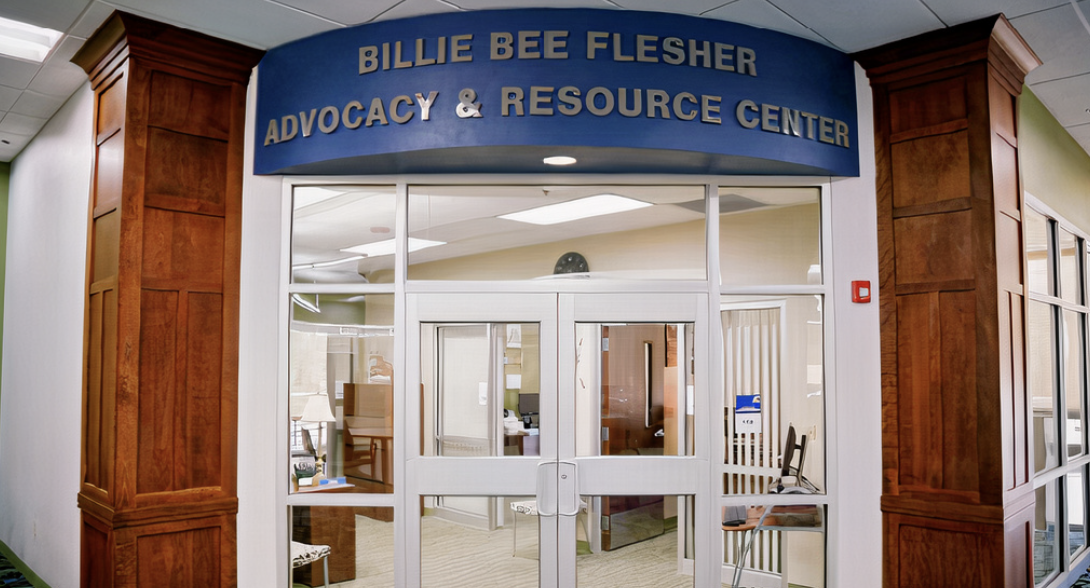
Even after decades of improvement efforts, completion rates at community colleges remain low, particularly among students who need developmental education. Basic needs insecurity contributes to these low completion rates. As a result, community colleges throughout the country have launched benefits “hubs” to help students secure their basic needs. However, there is limited evidence on whether connecting students with these hubs improves academic success.

This report details an evaluation of the Advocacy and Resource Center (ARC), a benefits hub at Amarillo College (AC) in Texas. In partnership with AC, we conducted an evaluation to advance two institutional goals:

Increase utilization of the ARC, particularly among students most at risk of leaving college, with a low-cost technology-enabled approach.
Estimate the academic impacts of connecting students to the ARC.
Over the course of a year, we emailed randomly selected students from low-income households and those enrolled in developmental education coursework, informing them about and inviting them to the ARC. We found that the emails (or “nudges”) paid off for students who received them:

Rates of visiting the ARC more than doubled from 22% to 56%.
Developmental education students nudged to visit the ARC were 20% more likely to pass developmental education courses, a crucial milestone.
However, we did not find clear evidence that nudged students completed more credits, received higher grades, or passed other courses at higher rates.

As community colleges across the nation work to improve student success and help students recover from the pandemic, this evaluation offers two lessons:

Insufficient information about existing basic needs supports keeps students from getting the help they need. The information barrier may be effectively overcome with personalized nudging, a low-cost solution.
Connecting students to basic needs supports helps students make academic progress, particularly those in need of developmental education.

College on the Margins: Higher Education Professionals’ Perspectives on Campus Basic Needs Insecurity (2020)

A substantial share of undergraduates are basic needs insecure, meaning they lack consistent access to essential material goods like food and shelter. These material hardships are associated with poorer academic success, but we know very little about higher education professionals’ perspectives on the matter. Purpose: This paper examines how higher education professionals perceive, understand, and support college students who experience basic needs insecurity. Research Design: Using data from interviews with 59 professionals who work at eight broad access public colleges and universities across five states, we employ an institutional logics perspective to understand how they draw on normative scripts, rationales, and schemas to guide their responses to campus basic needs insecurity. Findings: Higher education professionals have considerable discretion when working with students who are basic needs insecure, and they draw on organizational, professional, and broader social spheres to guide their interactions. We identify three distinct logics—systemic, quiescent, and cautious—that are unique from one another on two dimensions: locus of control and individual response based on perceived locus of control. Conclusions: The design and implementation of initiatives designed to support vulnerable students must consider the ways in which on-the-ground professionals understand students, their needs, and the sources of their challenges.