
Document Author: Sara Goldrick-Rab
Meal Vouchers Matter for Academic Attainment: A Community College Field Experiment (2023)
Given growing awareness of the high prevalence of food insecurity among college students, higher education leaders are
implementing various food interventions on their campuses. However, there is little research on the efficacy and impact of
these initiatives. Using data from a field randomized control trial, we find that a relatively modest financial investment in
campus meal cards coupled with proactive outreach by an existing campus office improved community college students’
academic attainment outcomes. Students who were invited to participate in the meal voucher program attempted and
completed more credits during their first year of college and were more likely to graduate in 2 years than otherwise similar
peers, indicating that a campus meal program can promote college success.
Supporting the Whole Community College Student: The Impact of Nudging for Basic Needs Security (2021)
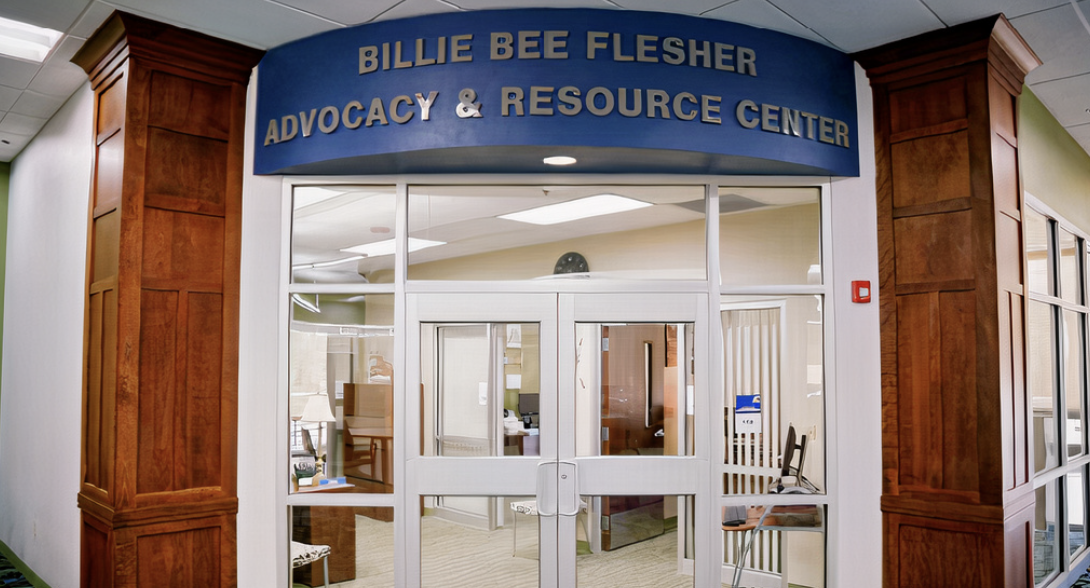
Even after decades of improvement efforts, completion rates at community colleges remain low, particularly among students who need developmental education. Basic needs insecurity contributes to these low completion rates. As a result, community colleges throughout the country have launched benefits “hubs” to help students secure their basic needs. However, there is limited evidence on whether connecting students with these hubs improves academic success.
This report details an evaluation of the Advocacy and Resource Center (ARC), a benefits hub at Amarillo College (AC) in Texas. In partnership with AC, we conducted an evaluation to advance two institutional goals:
Increase utilization of the ARC, particularly among students most at risk of leaving college, with a low-cost technology-enabled approach.
Estimate the academic impacts of connecting students to the ARC.
Over the course of a year, we emailed randomly selected students from low-income households and those enrolled in developmental education coursework, informing them about and inviting them to the ARC. We found that the emails (or “nudges”) paid off for students who received them:
Rates of visiting the ARC more than doubled from 22% to 56%.
Developmental education students nudged to visit the ARC were 20% more likely to pass developmental education courses, a crucial milestone.
However, we did not find clear evidence that nudged students completed more credits, received higher grades, or passed other courses at higher rates.
As community colleges across the nation work to improve student success and help students recover from the pandemic, this evaluation offers two lessons:
Insufficient information about existing basic needs supports keeps students from getting the help they need. The information barrier may be effectively overcome with personalized nudging, a low-cost solution.
Connecting students to basic needs supports helps students make academic progress, particularly those in need of developmental education.
Basic Needs Insecurity at Historically Black Colleges and Universities A #RealCollegeHBCU Report (2022)

Historically Black Colleges and Universities (HBCUs) were established primarily in the post-Civil War era to meet the educational needs of Black Americans. They provide pathways to upward social mobility and have a long-standing commitment to promoting both academic success and students’ health and well-being. But persistent funding inequities at both the state and federal levels actively undermine those commitments and leave the sector particularly vulnerable during the coronavirus (COVID-19) pandemic.
This report, a collaboration between The Hope Center and the Center for the Study of HBCUs, uses data from the #RealCollege Survey to examine the overlapping challenges affecting students attending HBCUs during fall 2020. In total, nearly 5,000 students from 14 public and private four-year HBCUs responded to the survey.
When Care Isn’t Enough: Scaling Emergency Aid During the COVID-19 Pandemic (2021)
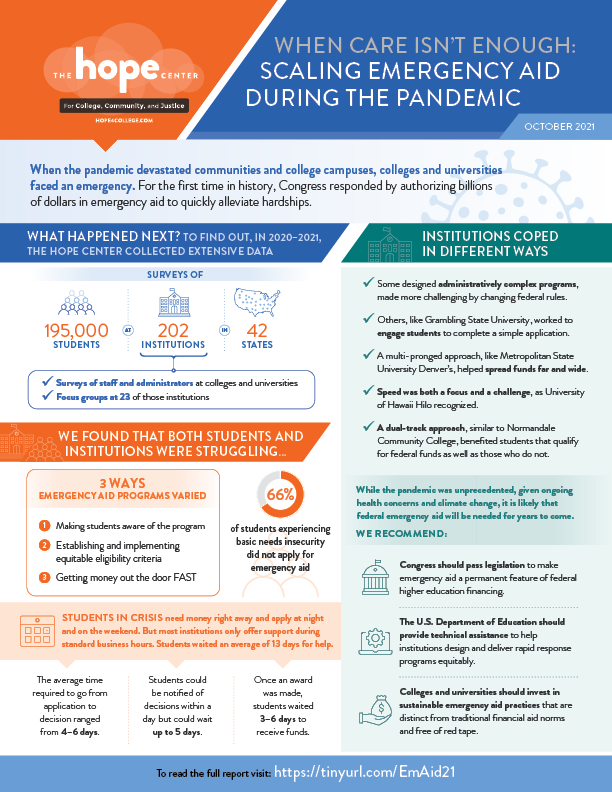
When the pandemic devastated communities and college campuses, colleges and universities faced an emergency. For the first time in history, Congress responded by authorizing billions of dollars in emergency aid to quickly alleviate hardships.
This report shows how colleges and universities met the challenge of emergency aid during the pandemic, drawing on a year of surveys and focus groups, fielded and conducted by The Hope Center and DVP-Praxis, that reflect the views of institutional leaders and students from coast to coast. The results offer valuable insights that should shape the future of emergency aid and student support. While the onset of the pandemic was unprecedented, its ongoing health concerns and the looming consequences of climate change ensure that knowing how to deliver emergency aid at scale will be essential to the well-being of future students. With these lessons in mind, we can all be better prepared and ready to respond.
The Real Price of College: Estimating and Supporting Students’ Financial Needs (2021)
For decades, complicated financial aid formulas and variable sticker prices have made it difficult for students to understand the real price of college. For colleges, understanding students’ financial need is also challenging; current financial aid formulas cause many students’ actual need to be understated.
This report examines what happens when:
financial aid leaders and staff better understand students’ financial need, as operationalized by negative EFC; and
students better understand college costs and how to advocate for more financial support.
Using data gathered at Temple University and six colleges and universities in Texas, we explore how more nuanced information about college costs and financial need can change beliefs and behavior among financial aid staff, leaders, and students.
Experimental Evidence on the Impacts of Need-Based Financial Aid: Longitudinal Assessment of the Wisconsin Scholars Grant (2020)
We conduct the first long-term experimental evaluation of a need-based financial aid program, the privately funded Wisconsin Scholars Grant. Over multiple cohorts, the program failed to increase degree completion and graduate school enrollment up to 10 years after matriculation. The program did reduce time-to-degree for some students and modestly increased the number of STEM degrees earned. The lack of robust effects raises important questions about the conditions necessary for financial aid to benefit students.
College on the Margins: Higher Education Professionals’ Perspectives on Campus Basic Needs Insecurity (2020)

A substantial share of undergraduates are basic needs insecure, meaning they lack consistent access to essential material goods like food and shelter. These material hardships are associated with poorer academic success, but we know very little about higher education professionals’ perspectives on the matter. Purpose: This paper examines how higher education professionals perceive, understand, and support college students who experience basic needs insecurity. Research Design: Using data from interviews with 59 professionals who work at eight broad access public colleges and universities across five states, we employ an institutional logics perspective to understand how they draw on normative scripts, rationales, and schemas to guide their responses to campus basic needs insecurity. Findings: Higher education professionals have considerable discretion when working with students who are basic needs insecure, and they draw on organizational, professional, and broader social spheres to guide their interactions. We identify three distinct logics—systemic, quiescent, and cautious—that are unique from one another on two dimensions: locus of control and individual response based on perceived locus of control. Conclusions: The design and implementation of initiatives designed to support vulnerable students must consider the ways in which on-the-ground professionals understand students, their needs, and the sources of their challenges.
Going without: An exploration of food and housing insecurity among undergraduates (2018)
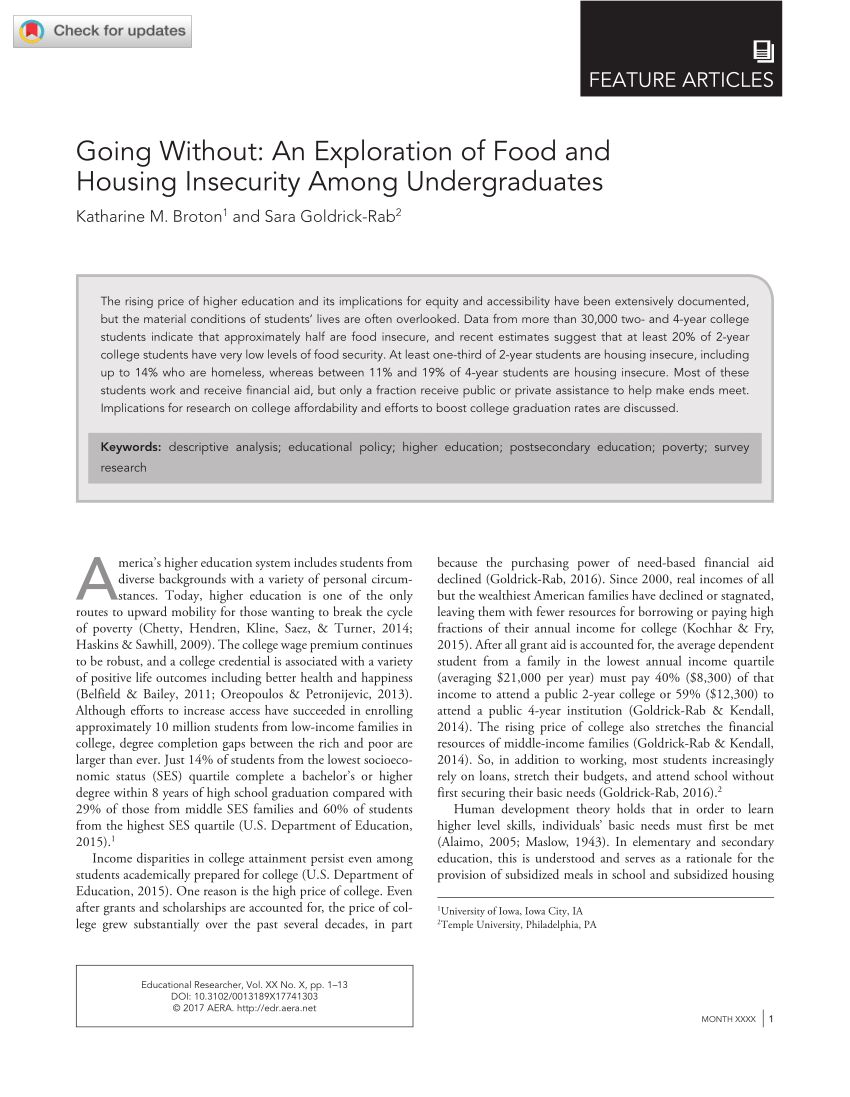
The rising price of higher education and its implications for equity and accessibility have been extensively documented, but the material conditions of students’ lives are often overlooked. Data from more than 30,000 two- and 4-year college students indicate that approximately half are food insecure, and recent estimates suggest that at least 20% of 2-year college students have very low levels of food security. At least one-third of 2-year students are housing insecure, including up to 14% who are homeless, whereas between 11% and 19% of 4-year students are housing insecure. Most of these students work and receive financial aid, but only a fraction receive public or private assistance to help make ends meet. Implications for research on college affordability and efforts to boost college graduation rates are discussed.